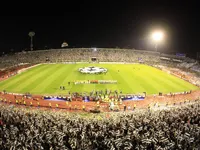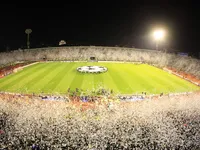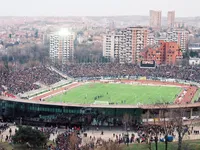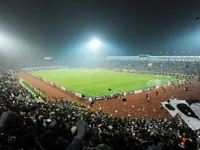
Stadium
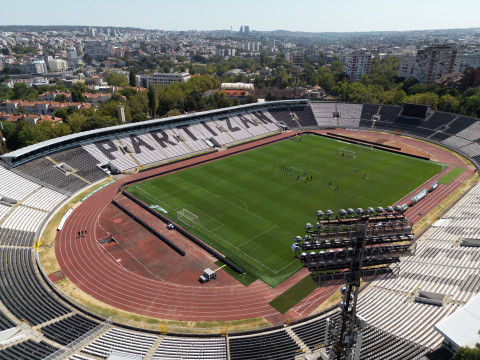
Pitch: 105 x 68
Capacity: 29,775 seats, 30 rows
Number of entrances and exits for spectators: 30
Highest elevation: 21 m.
Farthest points of the stands:
- Lengthwise (north-south): 236 m.
- Widthwise (east-west): 150 m.
Lighting: 1,500 lux (Philips equipment)

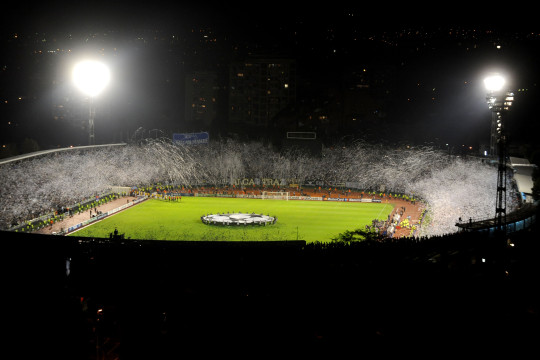
Partizan Stadium is a facility with the longest sports tradition in Yugoslavia. It is located in a place that has always been the center of the most important football events in the country. Prior to World War II, there was a field and the home of the famous champion BSK (Belgrade Sports Club).
Immediately after the end of the war, respecting the sports tradition, the construction of a new stadium began right there. On October 9, 1949, the first match was played on it, a clash between Yugoslavia and France (1-1) in the qualifiers for the World Cup. Until today, Partizan Stadium has hosted dozens of the world's biggest clubs and strongest national teams. It is part of European and world football history.
In the early period, Partizan Stadium could accommodate 55,000 spectators.
In recent years, the criteria of international football associations have been tightened, especially in terms of safety and spectator comfort. In line with these requirements, the stands were reconstructed in 1998, seats were installed, passages for the entrance and exit of the audience were expanded, modern equipment was installed, and the capacity of the stands was reduced to 29,775 seats, now meeting all the prescribed conditions.
In 1995, Partizan Stadium entered the system of developing world-class stadiums, with a project-program solution for covering and transforming it into a large sports-business center.
Gallery